
What is Montessori?
At its core, Montessori nurtures purposeful, self-motivated growth across all areas of development – cognitive, social, emotional, and physical. Children are given the freedom, within thoughtfully prepared environments, to explore, investigate, and make meaningful connections.
Learning is student-led and self-paced, guided by skilled and attentive educators. Teachers observe, support, and enrich each child’s experience, while peer collaboration and carefully designed materials foster independence, curiosity, and a lifelong love of learning.
Why Family Star Montessori?
At Family Star Montessori, education is more than a philosophy – it is a daily practice rooted in honoring the individuality of each child. We create environments where children feel empowered to explore their interests, develop their strengths, and reach their fullest human potential.
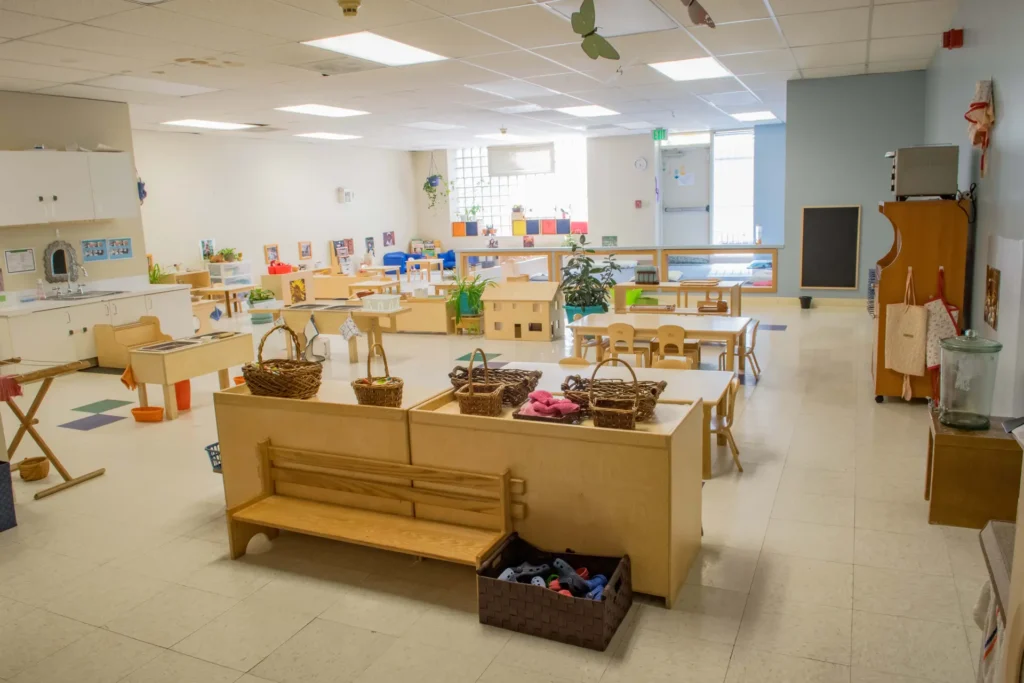
In our classrooms, you will see children working independently and in small groups, deeply engaged with purposeful materials. You will witness concentration, collaboration, and mutual respect – for one another and for their environment.
The result is lasting. Our students grow into confident, curious, and self-directed individuals – learners who think critically, act with integrity, and contribute meaningfully to their communities.
The Montessori Impact
Montessori education offers more than early learning; it builds a strong foundation for who your child becomes.
Stronger Early Learning Outcomes
Children in Montessori programs often demonstrate higher reading ability, stronger memory, and more advanced problem-solving skills by the end of kindergarten.
Confidence That Lasts
Unlike many early childhood models, the benefits of Montessori don’t fade over time – children continue to grow in independence, curiosity, and capability as they move forward.
Independence and Focus
Montessori students develop exceptional self-regulation by learning how to concentrate, persist through challenges, and take ownership of their work.
Learning at Their Own Pace
Each child is given the time and space to truly master skills before moving on, building both competence and a genuine sense of accomplishment.
Preparing For Life, Not Just School
Children leave Montessori environments as confident, thoughtful individuals who are able to think critically, work collaboratively, and engage meaningfully with the world around them.
For families, this means raising children who are capable, grounded, and inspired, and children who know how to learn, how to adapt, and how to thrive.
Montessori Terminology.
Absorbent Mind
From birth to age 6, children have an incredible ability to soak up information from their
environment – almost effortlessly. This is why early experiences, language exposure, and
environment matter so much.Casa dei Bambini (“Children’s House”)
The Montessori classroom for children ages 3-6 that is a warm, welcoming space designed just
for them.Control of Error
Many Montessori materials are designed so children can see and fix their own mistakes without
adult help. This builds independence, confidence, and problem-solving skills.Freedom Within Limits
Children are given the freedom to choose their activities and move independently, but within
clear, respectful boundaries. This balance helps them develop self-discipline and responsibility.Grace and Courtesy
Children are explicitly taught social skills, like how to greet someone, take turns, or ask for help.
This is so they can interact with others respectfully and confidently.Mixed-Age Classrooms
Children of different ages (typically within a three-year span) learn together. Younger children
learn from older peers, and older children build leadership and confidence by mentoring others.Nido
Nido means “nest” in Italian. In Montessori, it refers to the infant classroom (typically 6 weeks to
12–18 months) – a warm, nurturing environment designed to support a baby’s earliest
development through movement, exploration, and secure relationships.Normalization
A beautiful Montessori concept where children develop deep focus, calmness, and joy in their
work. This is when you’ll often see children fully engaged, peaceful, and self-motivated.Practical Life
These are everyday activities like pouring, sweeping, or buttoning. While they may seem simple,
they build coordination, focus, independence, and confidence.Prepared Environment
A thoughtfully designed space that encourages independence and exploration. Classrooms (and
even homes) are set up with child-sized furniture, accessible materials, and a sense of order—
so children can confidently choose and complete their own work.Sensitive Periods
Children go through natural windows of development when they are especially ready to learn
certain skills, like language or movement. Montessori classrooms are designed to support and
respond to these moments.Sensorial
Activities that help children refine their senses—touch, sight, sound, smell, and taste—laying the
foundation for learning and understanding.Work
In Montessori, what adults often call “play” is considered meaningful work. Children choose
activities that interest them, helping them build skills, concentration, and a deeper understanding
of the world around them.