
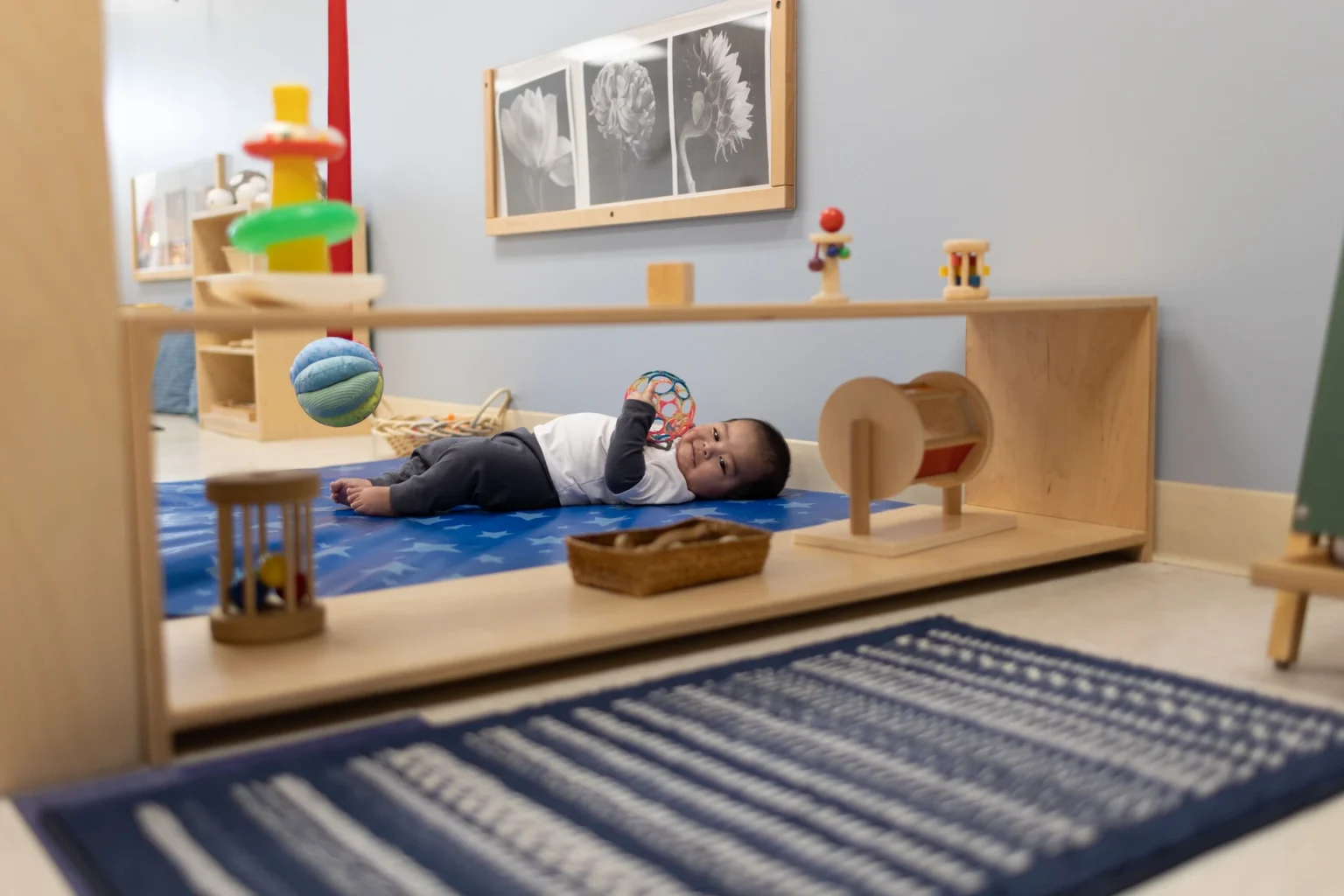
When most people think of Montessori, they picture preschool-aged children working independently with carefully designed materials. What’s less known is that Montessori begins at birth, and some of its most meaningful impact happens in the earliest months of life. At Family Star, this approach comes to life in our infant environments—called Nido classrooms—where everything is designed around a simple but powerful belief: even the youngest children are capable, aware, and actively learning from the very beginning.
The difference between a Montessori Nido and a traditional daycare setting is often something families feel right away. Many infant classrooms are busy and stimulating, with bright toys, swings, and a focus on keeping babies occupied and comfortable. In contrast, a Nido classroom is intentionally calm and thoughtfully prepared. Infants are given space to move freely on low mats rather than being placed in containers, allowing them to develop strength, coordination, and confidence at their own pace. The materials are simple, purposeful, and designed to support development rather than entertain, encouraging focus and meaningful engagement even in the earliest stages.
Just as important as the environment is the way adults interact with children. In a Montessori setting, caregiving moments like feeding or diapering are not rushed tasks, but opportunities for connection and communication. Teachers speak directly to infants, explain what is happening, and respond to their cues, building trust and supporting early language development. Rather than managing a group on a rigid schedule, teachers observe each child closely and adapt to their individual rhythms, creating a more responsive and respectful experience.
This approach fosters something deeper than routine care. When infants are given time, space, and consistent relationships, they begin to explore more confidently and engage more fully with the world around them. They are not being entertained or directed at every moment; they are discovering, practicing, and developing a sense of independence from the very start.
While many childcare settings provide safe and nurturing environments, Montessori offers a distinct perspective—one that prioritizes intention, respect, and the natural development of the child. For families, this often translates into a sense of calm and confidence, knowing their child is not only cared for, but truly understood. In those earliest months, that difference matters, because the way children experience the world at the beginning helps shape how they see themselves within it.